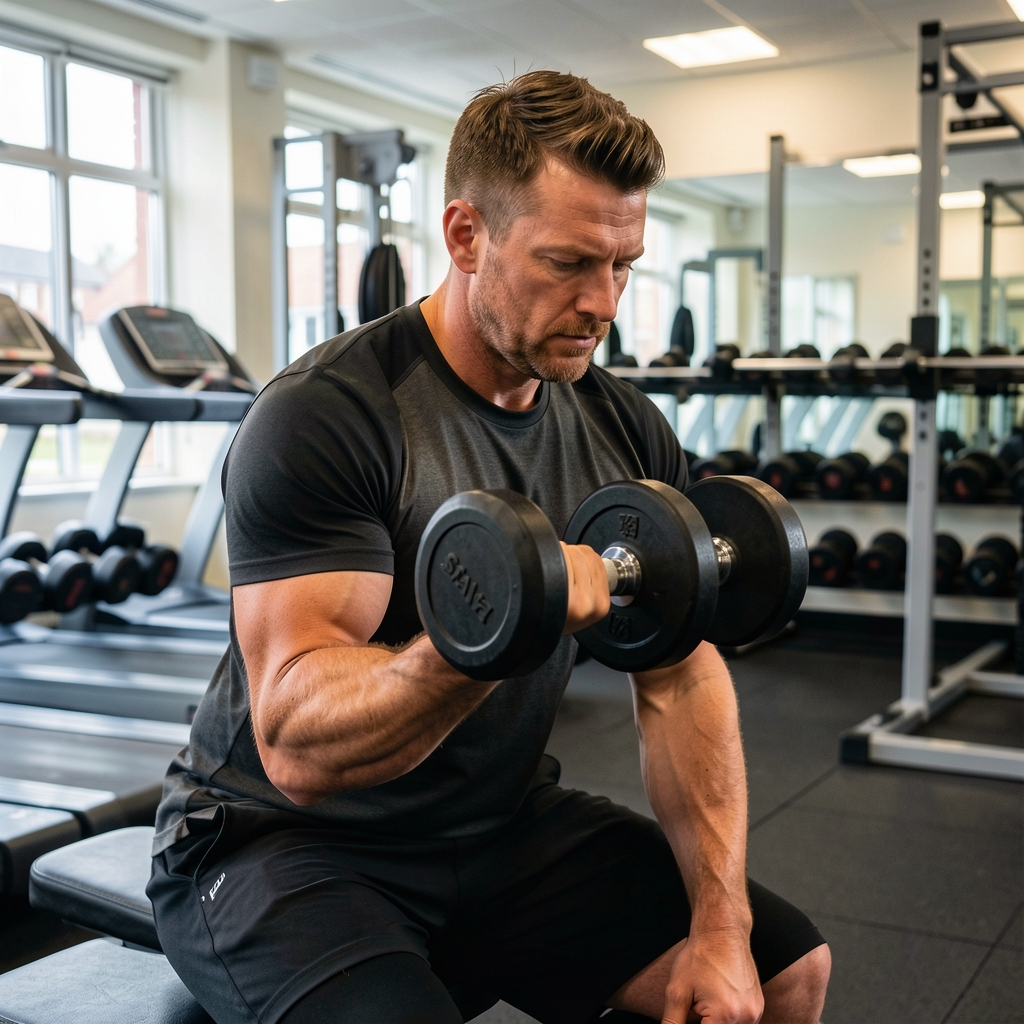
Strength training is often discussed in relation to body composition because it provides a stimulus for muscle and makes movement measurable. The conversation becomes less useful when it promises a fixed result or ignores food, sleep, experience and access. Research suggests that resistance work can sit within a broader routine, but studies vary in duration, intensity and participant group. This guide looks at the connection without turning it into a sales message or a personal professional recommendation.
What counts as strength work
Resistance can come from weights, machines, bands or body weight. The common feature is that muscles work against a challenge. A beginner's session and an experienced lifter's session may look different while both fit the broad definition. Someone new to structured exercise might begin with bodyweight squats and a resistance band, while someone with several years of consistent training might use free weights with a carefully planned progression — both are legitimately doing strength work.
Muscle, energy and adaptation
Training creates a reason for the body to adapt. Over time, people may become more capable of lifting, carrying or repeating a movement. Energy use during a session is only one part of the picture; recovery and everyday movement also influence the broader pattern. A single training session burns a relatively modest amount of energy compared with a full day of ordinary movement, which is one reason consistency over weeks tends to matter more than the intensity of any individual workout.
Why consistency matters
Evidence is often gathered over repeated weeks rather than one impressive session. A realistic schedule can be easier to observe than an ambitious plan that quickly disappears. Technique, rest and gradual progression are useful ideas to discuss with a qualified professional when needed. A programme that fits comfortably around a working week — even if modest — is generally more sustainable than an intense schedule abandoned after a fortnight.
Reading the evidence
Look at the population studied, the length of the study and how the outcome was measured. A study following healthy young adults for eight weeks does not necessarily generalise to an older population with different starting points. Studies also differ in whether they measured body weight, waist circumference, strength performance or a combination of these, and each measure tells a slightly different part of the story.
Recovery, injury and gradual progress
Rest between sessions allows tissue to adapt, and skipping this stage entirely can increase the likelihood of strain or fatigue rather than accelerating progress. Gradual increases in load or repetitions, rather than large jumps, are generally considered a more sustainable approach — something a qualified trainer or physiotherapist can help tailor to an individual's history and goals.